



PPC vs SEO for a growing business: what each costs, how fast each pays back, and a simple rule for which to fund first with real 2026 numbers.
Have you ever stared at your marketing budget and wondered whether it belongs in Google Ads or in SEO? You can only fund one properly this quarter, and every agency you ask says "both."
That answer is true and useless. It doesn't help you decide what to pay for first.
The right pick depends on three things: how fast you need leads, what a click costs in your market, and how long you can wait. This guide gives you real 2026 numbers for each and a simple rule to choose.
PPC vs SEO: The Short Answer
PPC (pay-per-click) buys visibility immediately and stops the moment you stop paying. SEO earns organic rankings slowly and keeps working after the spend stops. If you need leads this month and a click is affordable, start with PPC. If you can wait a few months and clicks in your market are expensive, start with SEO. Most businesses end up running both, in that order.
Key Takeaways
- PPC starts sending traffic within days, while Google says changes to organic results can take from a few hours to several months to show.
- LocaliQ's 2026 benchmark puts the average Google Ads click at $5.42, but dentists pay $8.00 and attorneys $9.87 per click.
- You can't pay Google for a better organic ranking: Google says appearing in its results is free, so ads and SEO are separate budgets.
- SparkToro found 68.01% of US Google searches in early 2026 ended without a click, so every click you earn or buy counts for more.
- The cheapest plan is usually PPC to prove demand, then SEO to cut your cost per lead over time.
- Track cost per lead and revenue for each channel separately, or you will fund the wrong one.
What Is the Real Difference Between PPC and SEO?
Both put your business in front of people who are searching. The difference is how you get there and what happens when you stop.
How they compare:
- Speed: PPC can run the day your campaign is approved. SEO takes weeks to months.
- Cost model: PPC charges per click. SEO charges for time and content up front, with no fee per visit.
- Durability: PPC traffic ends when the budget ends. A page that ranks keeps bringing visitors.
- Control: with PPC you choose the keyword, the message and the page. With SEO, Google decides what to show.
- Position: ads sit above organic results, but many people scroll past them to organic listings.
That last point matters less than it used to. Google now answers many searches itself, which changes how much of either channel gets seen at all.

How Fast Does Each One Pay Back?
Speed is the biggest practical gap. Google's own SEO starter guide says changes to your site "might take effect in a few hours, others could take several months," and suggests waiting a few weeks before judging whether your work helped.
Ads have no such delay. A new campaign can collect clicks within days, which makes PPC the faster way to learn what your market responds to.
If you need leads to cover payroll next month, SEO alone can't help you. Plan for that.
What Does Each Cost? Real 2026 Numbers
Here is where small businesses get surprised. According to LocaliQ's 2026 search advertising benchmarks, the average Google Ads click costs $5.42 across industries, with an average cost per lead of $66.69. Your industry could be far from that average.
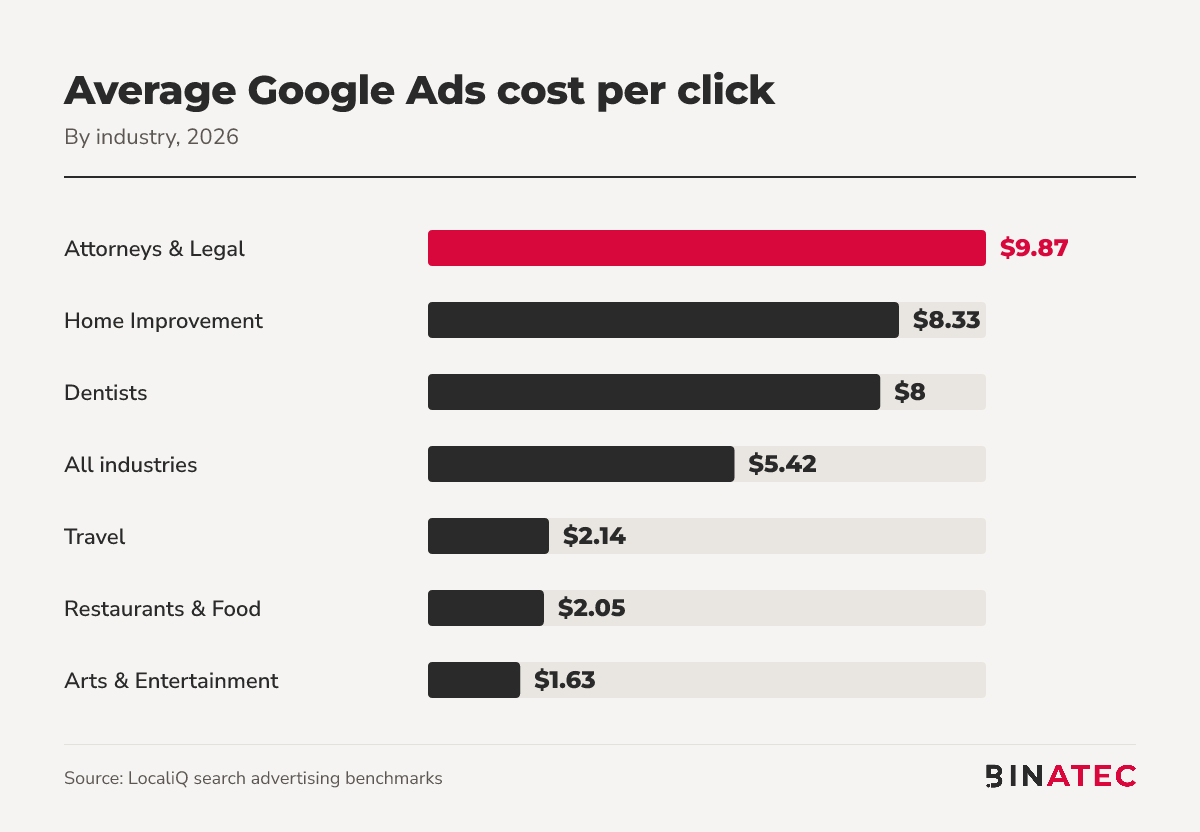
Do the maths for your own market. At the all-industry average, 100 clicks cost $542. If about 8% of those clicks become leads, as the same benchmark reports for conversion rate, that is roughly 8 leads. Your own numbers will differ, so treat this as a way to estimate, not a promise.
SEO costs are mostly time: research, content, technical fixes and links. Our guide to how much SEO costs breaks down real price ranges by budget.
Can You Pay Google to Rank Higher in Organic Results?
No. Google's Search Essentials says "It doesn't cost any money to appear in Google Search results, no matter what anyone tries to tell you." Running ads won't lift your organic position, and ranking well won't lower what you pay for ads.
That is why these are two separate bets. Judge each on its own results.
Why Zero-Click Searches Change the Maths
SparkToro's 2026 analysis of Similarweb clickstream data found that 68.01% of US Google searches from January to April 2026 ended without a click, up from 60.45% in 2024. The author notes the panels differ between years, so treat the comparison as a direction, not an exact measure.
The point for you is simple. Fewer searches produce a click, so a click you win is worth more, whether you earn it or buy it. It also makes a thin SEO strategy riskier, because a ranking alone no longer guarantees visits.
A Simple Rule for Choosing
Use these four questions in order. Stop at the first one that gives a clear answer.
- Do you need leads within 30 days? Start with PPC.
- Is a click in your market above $8 and your sale small? Start with SEO, because the click cost may eat the margin.
- Do you already have a page that converts? Start with PPC to send traffic to it. Ads on a weak page just waste money.
- None of the above? Split the budget about 70/30 toward the channel your first answer points to, and review after 90 days.
The 70/30 split is our rule of thumb, not a published benchmark. Adjust it with your own cost per lead.

PPC vs SEO in Action: A Quick Example
Picture a local dental practice. Clicks cost about $8.00 on average, per the benchmark above. Ten clicks a day is $80, or around $2,400 a month, before a single patient books.
Starting with SEO and local SEO means a longer wait but a lower cost per visit later. Starting with Google Ads fills the diary sooner. A sensible plan runs ads on the highest-intent searches, such as emergency appointments, while building local rankings for everything else.
Then the ad data tells you which searches actually produce patients, and the SEO work targets those first. That is the real benefit of starting with PPC: it shows you what to rank for.
Where This Rule Breaks Down
Some cases don't fit. If your product is cheap and your clicks cost $5, PPC may never be profitable on the first sale, so you need repeat purchases or email follow-up to make it work. If your market is very new, nobody searches for it yet, and neither channel helps much until you build demand elsewhere.
Also, ads can't fix a slow or confusing site. Before you spend, check your landing pages and your conversion rate.
FAQs
Is PPC better than SEO?
Neither is better in general. PPC is better when you need leads quickly or want to test an offer. SEO is better when you can wait and want lower cost per visit over time. Most businesses get the best return by starting with the one that matches their timeline and then adding the other.
Which is cheaper, PPC or SEO?
PPC is cheaper to start and costlier to keep, because you pay for every click. SEO costs more up front in time and content but has no per-click fee. According to LocaliQ, the average Google Ads click costs $5.42 in 2026, so compare that with your monthly SEO budget.
How long does SEO take compared with PPC?
PPC can bring traffic within days. Google says changes to your site can take from a few hours to several months to show in search, and it suggests waiting a few weeks before judging results. Plan on months, not weeks, for SEO to build momentum.
Does running ads help my SEO?
No. Google says it costs nothing to appear in its search results and nothing you pay changes that. Ads and organic rankings are separate. Ads can still help indirectly by showing which keywords convert, so you know what to target in your SEO work.
Conclusion
Fund the channel that matches your timeline first. Need leads now, with clicks you can afford? Start with PPC. Can wait, with expensive clicks? Start with SEO. Then add the other.
This week, look up the average cost per click for your top three keywords and compare it with the value of one customer. That single number usually settles the question.
If you want help working it out for your business, get a free quote and we will look at your market with you. Our SEO and PPC teams work from one plan.
Sources
- LocaliQ: Search advertising benchmarks 2026
- SparkToro: In 2026, Less than One Third of Google Searches Still Send a Click
- Google Search Central: SEO Starter Guide
- Google Search Central: Search Essentials


John Doe
Supreb Information. Thanks
15 July 2014 View replies . 1