



Learn how to do competitor analysis in 6 steps: pick a goal, rank rivals, study their ads in free libraries, find gaps and finish with three clear actions.
Have you ever launched a campaign, only to find a competitor already running almost the same offer, in better words, a week earlier?
It stings. And it usually isn't bad luck. It's what happens when you plan in a vacuum.
Most advice on how to do competitor analysis ends up as a giant spreadsheet nobody opens twice. That's not what you need. You need a short, repeatable routine that tells you who you're really up against, what they're saying, where they're spending and where they're weak.
This guide gives you that routine in six steps, using free tools and public data. You can run it in an afternoon.
Key Takeaways
- Competitor analysis only pays off when you set one clear goal first, such as winning a segment, fixing positioning or targeting one rival's customers.
- Your real competitors are the businesses your buyers compare you with in search and in conversation, which often differs from the list in your head.
- Ranking rivals into three tiers keeps you from spending a week studying a company that doesn't affect your pipeline.
- Google's Ads Transparency Center and Meta's Ad Library show competitor ads for free, but they show what ran, not what worked.
- A rival's ad that has run for months is a stronger signal than a new one, because nobody keeps paying for an ad that loses money.
- Refresh the analysis about once a quarter, and finish with three specific actions instead of a long report.
Step 1: Set One Goal Before You Look at Anyone
Start with the decision you want the research to help you make. Atlassian's guide puts it plainly: set a clear goal that keeps you focused. Its examples include entering a new market, building authority and winning over one competitor's customers.
Pick one. "Understand the market" is not a goal. "Decide which three messages to test in Google Ads next month" is.
Write it at the top of a blank page. Every row you add later has to help answer it. If it doesn't, cut it.
Step 2: Build the Right Competitor List
Most owners list the three rivals they think about at night. Your buyers list something different.
Start with how people search. Atlassian suggests searching Google for your product name, your competitors' product names, a short description of what you sell and your industry, then confirming the list by asking customers, industry contacts and colleagues.
Then sort what you find. Creately's guide splits competitors into three groups:
- Direct competitors sell something similar to the same audience.
- Indirect competitors solve the same problem in a different way, such as a substitute or an alternative.
- Potential competitors could enter your market later.

Rank them into three tiers
Atlassian's approach is to rank competitors into three tiers, with tier 1 as the major competitors. Rank by product similarity and by whether you chase the same audience, not by brand fame.
Tier 1 gets a full review. Tier 2 gets a light check. Tier 3 just gets a name on a watch list.
Step 3: Compare Offers, Pricing and Positioning
Open each tier 1 rival's website like a buyer would. Write down what they sell, what it costs (or how they hide the price), who they say it's for and the one promise on their homepage.
Atlassian also suggests reading their blog, social accounts, press releases and partnerships to spot patterns in strategy and targeting. And talk to customers who have switched between you and a competitor if you can. Their reasons beat any tool.
Use the same columns for every company. A simple table works:
- Who they target and the exact words they use for it.
- Their main promise and the proof behind it (reviews, case studies, numbers).
- Pricing model and the offer a visitor sees first.
- The main call to action and what it asks of the visitor.
- What they never mention, which is often your opening.
That last line matters more than it looks. Gaps in a rival's message are where your positioning can stand out.
Step 4: See Where They Advertise (For Free)
You can look at competitor ads without paying for a tool. Two public libraries cover most of what you need.
Google Ads Transparency Center
Search a competitor's name or domain. Social Media Examiner's walkthrough notes the default view covers all formats, topics and your local region, and you can narrow it by format and date. It shows ads that are active or delivered in the last 30 days.
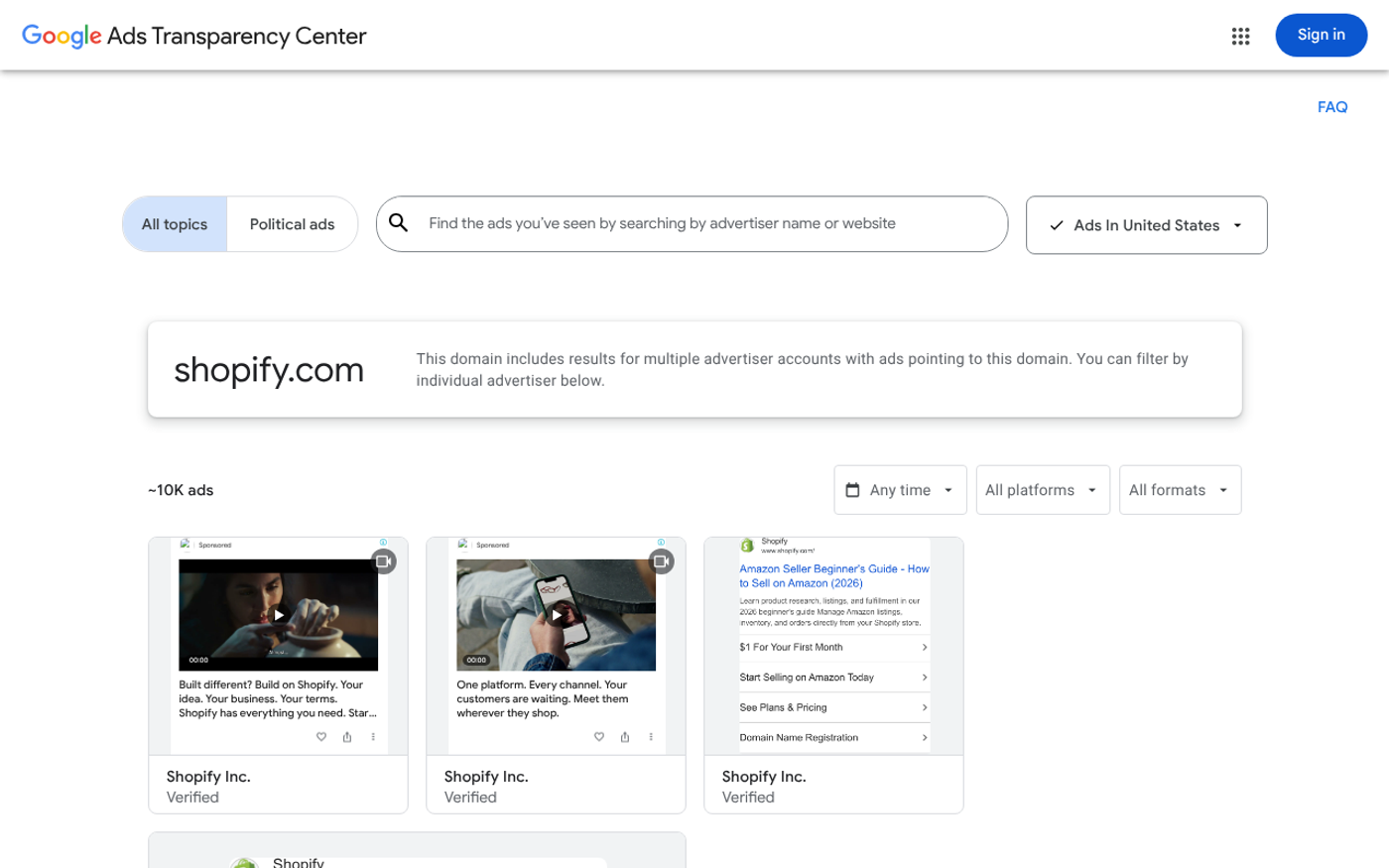
Look at the volume of ads, the mix of text, image and video, and the offers. The same guide points out that a larger active portfolio can mean more testing or higher spend, and that call-to-action wording hints at funnel stage.
Meta Ad Library
Shopify's guide explains that the library shows ads currently running across Facebook, Instagram, Messenger and Audience Network partner sites, and you don't need a login for basic search. You can filter by country, platform, media type and active status.
Two limits to remember. Inactive non-political ads aren't shown, and ads on other platforms like Google don't appear. So a blank result doesn't prove a rival isn't advertising.
Read the age, not just the ad
Shopify's guide suggests using the impressions-by-date filter to see how long an ad has run, since long runs can suggest it works. It's an inference, not proof. But a message that has survived months of budget reviews tells you more than a brand-new one.

Step 5: Compare Search and Content Visibility
Ads show what rivals pay for. Search shows what they've earned.
Search your ten most valuable keywords yourself and note who shows up, what format wins and whether an AI answer appears. Then check how each rival's page is built: the title, the headings, the questions it answers. Creately lists social and SEO activity, reviews and analytics platforms as standard places to gather this kind of data.
Look for topics where several rivals rank but all say the same thing. That's a gap you can fill with a sharper answer. If you want a second pair of eyes, our competitor analysis service does this systematically, and our SEO team can turn the gaps into pages.
Step 6: Turn Findings Into Three Actions
Most analyses die here. Don't write a 30-page report. Write the actions.
Atlassian's template includes a SWOT analysis of your company and each rival, covering features, marketing strategy and messaging. Use it, but only to feed decisions. Finish with three lines:
- One message to test, based on a gap in rival positioning.
- One channel or ad format to try, based on what competitors run for months.
- One thing to stop copying, because everyone in your market does it.
Put them in your next campaign plan. If your analysis feeds a wider plan, our go-to-market strategy work covers how positioning, search and paid media fit together.
Competitor Analysis in Action: A Quick Example
Say you sell project software to agencies, and your goal is to pick a message for next month's LinkedIn campaign.
You search Google and find five rivals. Two are tier 1. Their homepages both promise "all-in-one" and talk about features. Neither mentions how long setup takes.
In Meta's Ad Library, one of them has run the same video for months, which suggests it converts. The other changes creative weekly.
Your three actions: test a message about setup in days, copy the long-running video's structure rather than its words, and stop using "all-in-one" in your own copy. That's a result you can use on Monday.
Where Competitor Analysis Breaks Down
A few honest limits.
- Ad libraries show what ran, not what worked. The Social Media Examiner guide only suggests that volume signals testing or spend. It can't tell you performance.
- Copying a rival can backfire. They may be wrong, or serving buyers you don't want.
- Private numbers are guesses. Atlassian cites a rule of thumb for estimating private company revenue from headcount, but treat it as rough at best.
- Your customers matter more. Interviews with people who chose you or left you beat any dashboard.
FAQs
What is the first step in competitor analysis?
Set one clear goal. Decide which decision the research should help with, such as choosing a message, entering a segment or targeting a rival's customers. A defined goal stops you collecting data you never use and keeps the whole process short.
How many competitors should I analyse?
Rank them into three tiers and give tier 1 a full review. For most businesses that means two to five companies studied closely, with the rest on a watch list. Studying everyone equally wastes time on rivals who don't affect your sales.
How often should I update a competitor analysis?
About once a quarter. Atlassian's guide recommends refreshing it roughly once a fiscal quarter. Between updates, set a reminder to check rival ads and homepages after big launches or pricing changes.
Can I see my competitors' ads for free?
Yes. Google's Ads Transparency Center and Meta's Ad Library are both free and need no ad account for basic search. They show which ads ran, with copy and creative, but not budgets or results, so treat them as clues.
Conclusion
Good competitor analysis is a short loop: one goal, a ranked list, a side-by-side comparison, a look at ads and search, then three actions.
This week, pick your goal, list five rivals and spend an hour in the two ad libraries. You'll learn more than most reports teach.
If you'd like help turning it into a plan, get a free quote and we'll take a look.
Sources
- Atlassian: Competitive analysis guide
- Social Media Examiner: Google Ads Transparency Center
- Shopify: Facebook Ad Library guide
- Creately: How to do a competitive analysis


John Doe
Supreb Information. Thanks
15 July 2014 View replies . 1