



What is the best social media platform for a small business? Skip the popularity contest and match one platform to your customer and goal, with 2026 Pew data.
Are you posting on four platforms, getting a few likes, and wondering which one is actually worth your Friday afternoon?
Most small business owners are. Every guide says "be everywhere", and nobody has the time or the budget to do that well.
So here's the short answer, then the reasoning. The best social media platform for a small business is the one where your ideal customer already spends time and where your goal (calls, sales, leads or local visits) can be measured. For most local and consumer businesses that's Facebook or Instagram. For most B2B businesses it's LinkedIn.
This guide gives you a quick way to choose, the numbers behind it, and a 30-day test so you commit to one platform with evidence instead of a hunch.
Key Takeaways
- No platform wins for every business, so choose by where your customers are and what you need from social, not by which app is biggest.
- According to Pew Research Center, 84% of U.S. adults use YouTube and 70% use Facebook, so Facebook still reaches the widest everyday audience.
- Age changes the answer: Pew found Instagram use is 79% for adults 18-29 but only 21% for those 65 and over.
- B2B businesses usually get more from LinkedIn, where buyers already expect professional content.
- Start with one platform for 30 days, measure leads or enquiries, and only add a second once the first is working.
How Do You Choose the Best Social Media Platform?
Start with the customer, not the platform. Ask three questions in order.
- Who buys from you? Write down their age range, job and where they already look for businesses like yours.
- What do you need social to do? Win local customers, sell products, generate B2B leads, or build trust before a sale.
- What can you keep up? A weekly video is a bigger ask than a weekly photo or text post. Pick a format you can sustain for six months.
Social also matters before the sale. Salesforce reports that 48% of customers prefer social media to learn about small businesses, so even a quiet, tidy profile helps people decide whether to trust you.

Where Are Your Customers? The 2026 Numbers
Reach is only part of the picture, but it's a useful starting point. Pew Research Center surveyed 5,511 U.S. adults between Jan. 30 and June 18, 2026, and asked which platforms they ever use.
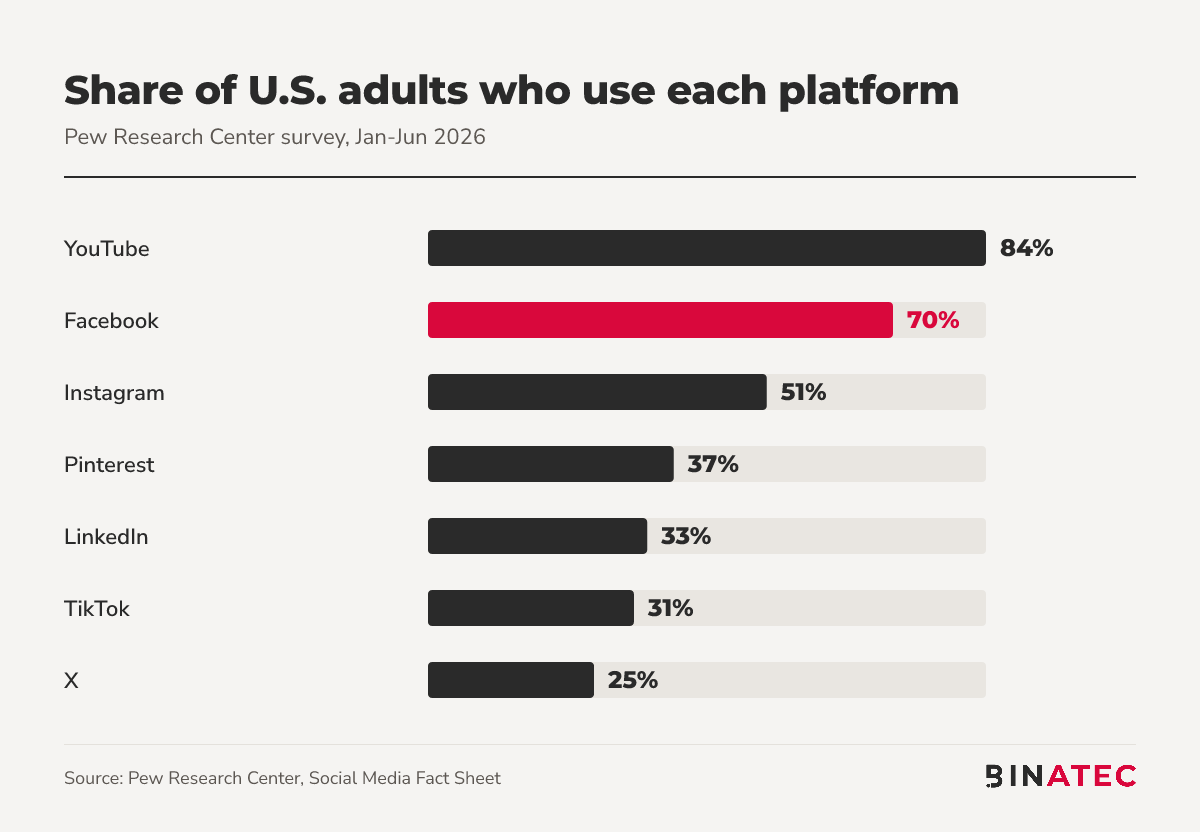
YouTube and Facebook are the two giants. Instagram is the only other platform used by about half of adults.
These are U.S. figures. If you sell mainly in the UK, treat them as a guide and check your own audience data in Meta Business Suite or your analytics.
Facebook: Best for Local Businesses and Wide Reach
Facebook reaches the broadest mix of ages. Pew found 78% of adults aged 30-49 and 71% of those aged 50-64 use it, and even 59% of people 65 and over.
That makes it a strong pick for local services, restaurants, trades, clinics and shops whose customers skew older or span many ages. Groups, local reviews and Messenger conversations all help people find and contact you.
The catch is organic reach. A page post often reaches a small share of followers, so plan to put a little paid budget behind your best content. Our Meta ads service covers that side.
Instagram: Best for Visual Products and Younger Buyers
Instagram skews young. Pew found 79% of adults aged 18-29 use it, against 64% of those 30-49, 41% of those 50-64 and 21% of those 65 and over.
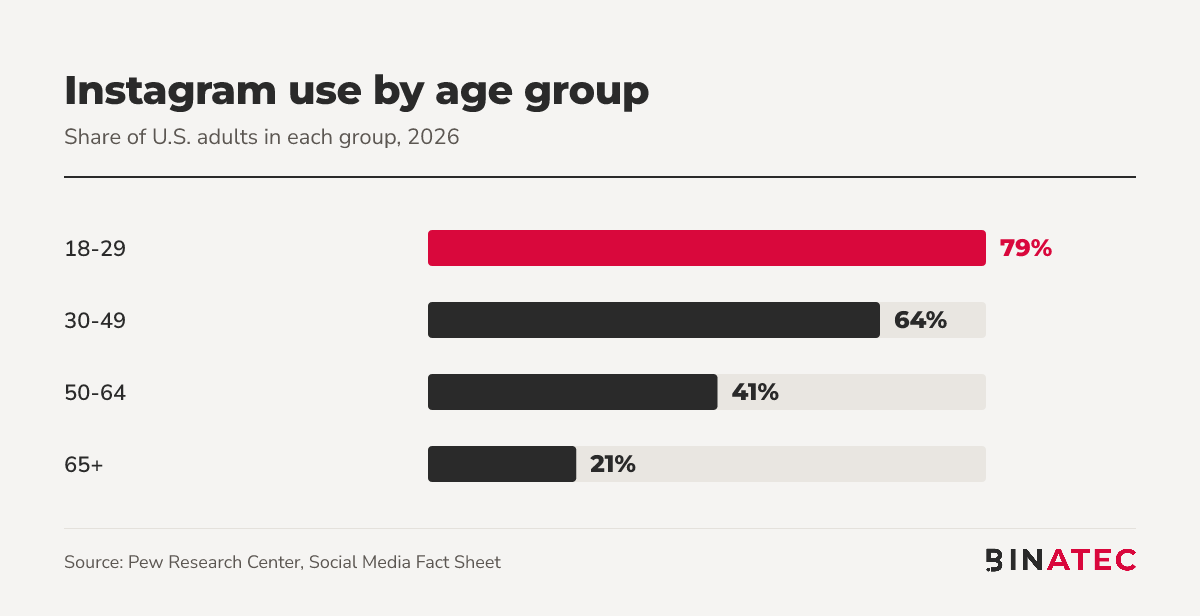
If you sell something people can see (food, fashion, beauty, home, events, design work), Instagram lets you show it quickly. Carousels that teach one useful thing tend to earn saves and shares, which is what you want from a small account.
If your buyers are mostly over 65, it's probably not your first platform. Facebook will serve them better.
LinkedIn: Best for B2B and Professional Services
Pew puts LinkedIn use at 33% of U.S. adults. That's a smaller audience than Facebook, but it's the right audience if you sell to businesses.
Consultants, agencies, software firms and finance or legal practices win here by sharing practical advice that shows how they think. Decision makers are on LinkedIn for work, so a useful post reaches them in the right frame of mind.
If B2B lead generation is your goal, pair organic posting with a clear offer and consider LinkedIn ads once you know which message works.
TikTok, YouTube and Pinterest: When They Make Sense
YouTube is the most used platform in the Pew survey, at 84% of U.S. adults. It rewards businesses that explain things: how-to videos, product demos, and answers to the questions customers ask you every week. Videos keep working long after posting, which suits small teams.
TikTok is used by 65% of 18-29 year olds but only 11% of people 65 and over, per Pew. It works for reaching younger audiences with short, personable video, if you can post consistently. See our TikTok ads service if you want paid reach.
Pinterest is used by 37% of U.S. adults. It suits businesses where people plan a purchase, such as weddings, home, interiors, recipes and gifts.
Best Platform by Business Type: A Quick Example
Here's how the logic plays out. These are illustrative matches, not guarantees.
- Local plumber or dentist, customers 35-70: Facebook first, with a complete Google Business Profile alongside it.
- Boutique or beauty salon, customers 18-40: Instagram first, with short Reels showing the work.
- B2B consultancy selling to managers: LinkedIn first, one useful post a week.
- DIY or home-improvement shop: YouTube first for how-to videos, Pinterest second.
- Cafe or restaurant: Instagram for visuals and Facebook for opening hours, events and local groups.

Run a 30-Day Test Before You Commit
You don't need to guess. Pick the platform your customer logic points to, then test it.
- Week 1: Set up or tidy the profile: clear name, a one-line promise, a link to a page that sells, and a way to contact you.
- Weeks 1-4: Post three times a week in one format you can sustain.
- Every post: Include one clear call to action, such as a message, a call or a click to a landing page.
- Day 30: Count enquiries, calls, messages and link clicks, and note which posts drove them.
If you get no enquiries after 30 days of steady posting, change the content or the platform before adding more of either. If you do, double down on what worked.
When This Advice Doesn't Apply
Pew's numbers show who uses a platform, not who buys from you. A niche audience can be more valuable than a huge one.
If your existing customers tell you they found you through a Facebook group, a subreddit or a WhatsApp community, go there even if it isn't the biggest platform. Your own customer data beats any general survey.
And if social isn't bringing customers, don't force it. For many businesses, local SEO or search ads will find buyers who are already looking.
FAQs
What is the best social media platform for a small business?
It depends on your customer and goal. Facebook suits local and consumer businesses with a wide age range, Instagram suits visual products and younger buyers, and LinkedIn suits B2B. Pick one, test it for 30 days, and measure enquiries before adding another.
What is the best social media platform for advertising a business?
Facebook and Instagram share Meta's ad system, so they're the usual starting point for consumer and local offers, while LinkedIn works best for B2B. Choose the platform where your buyers already are, then test small budgets on one offer before scaling.
Should a small business be on every platform?
No. Spreading a small team across many platforms usually means weak content everywhere. Do one platform well first. Once it produces enquiries on a steady rhythm, add a second that reaches a different part of your audience.
How many platforms should a small business use?
One to start, two at most within the first year. Reuse the same ideas in different formats, such as turning a Facebook post into an Instagram carousel, instead of inventing new content for each platform.
Conclusion
The best social media platform for your small business is the one where your customers already spend time and where you can measure results. Start from the customer, not the app.
This week, write down your ideal customer's age and need, pick one platform from this guide, and commit to the 30-day test.
If you'd like help choosing and running it, our social media marketing team can build a plan around your goals. Or get a free quote and tell us what you're trying to achieve.
Sources
- Pew Research Center: Social Media Fact Sheet
- Salesforce: Best Social Media Platforms for Small Business


John Doe
Supreb Information. Thanks
15 July 2014 View replies . 1